Q&A Related to Fire Sprinklers
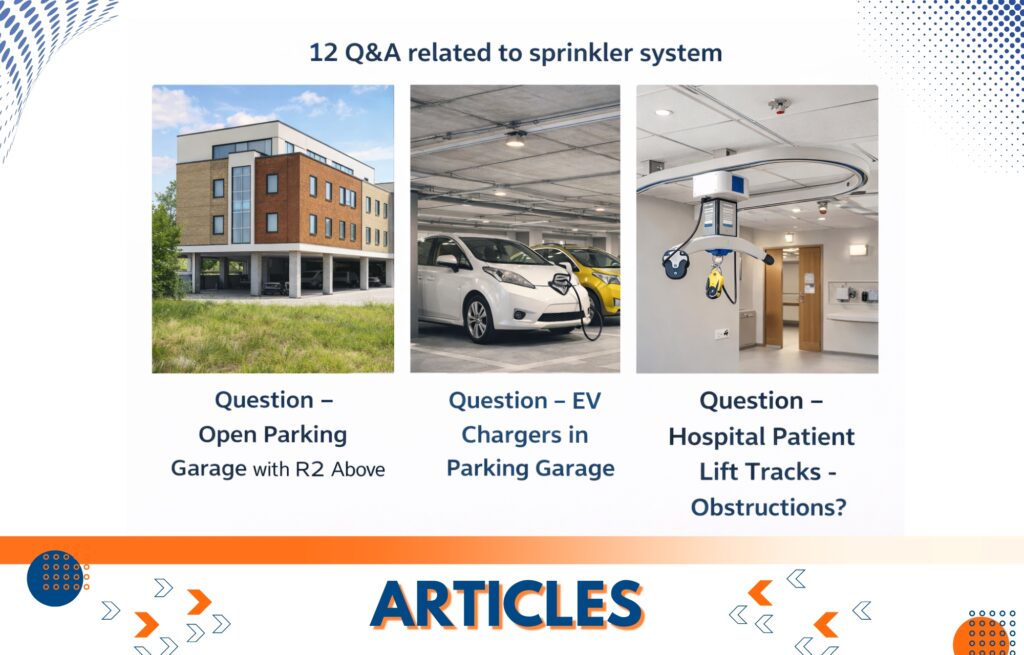
The NFSA’s Codes, Standards, and Public Fire Protection personnel provided the following answers to 12 questions related to sprinklers Open Parking Garage with R2 Above, Hydraulic Placard vs. Main Drain Test, Hydraulic Placard vs. Main Drain Test, Sloped Ceiling Adjustment, Hospital Patient Lift Tracks – Obstructions?, NFPA 13D Plan Requirements, Tee at Suction of Fire […]
Q&A Related to Fire Sprinkler Testing, Gauges for Dry Standpipes, and Water Tank Refill
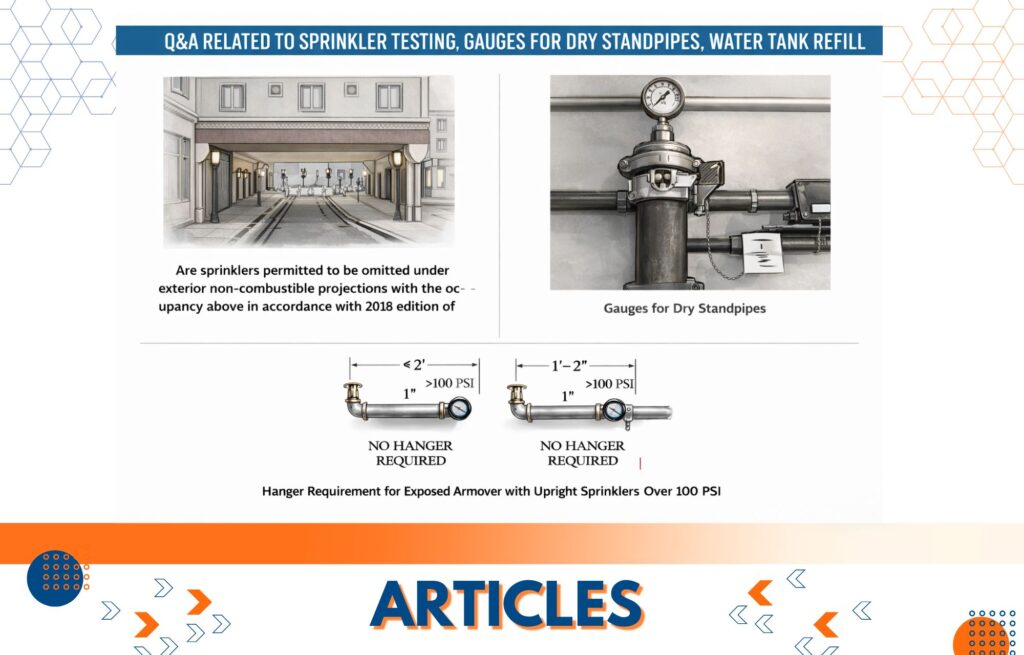
Summary- The article addresses various fire protection and safety code questions. It covers topics such as the omission of sprinklers under non-combustible projections with occupancy above, regulations for townhouse sprinkler mains, and the distinction between ice obstruction inspections and internal condition assessments. It also discusses requirements for underground CPVC pipes and pressure reducing valve flow […]
Calculations for Hydraulics and Cloud ceilings and other Q&A
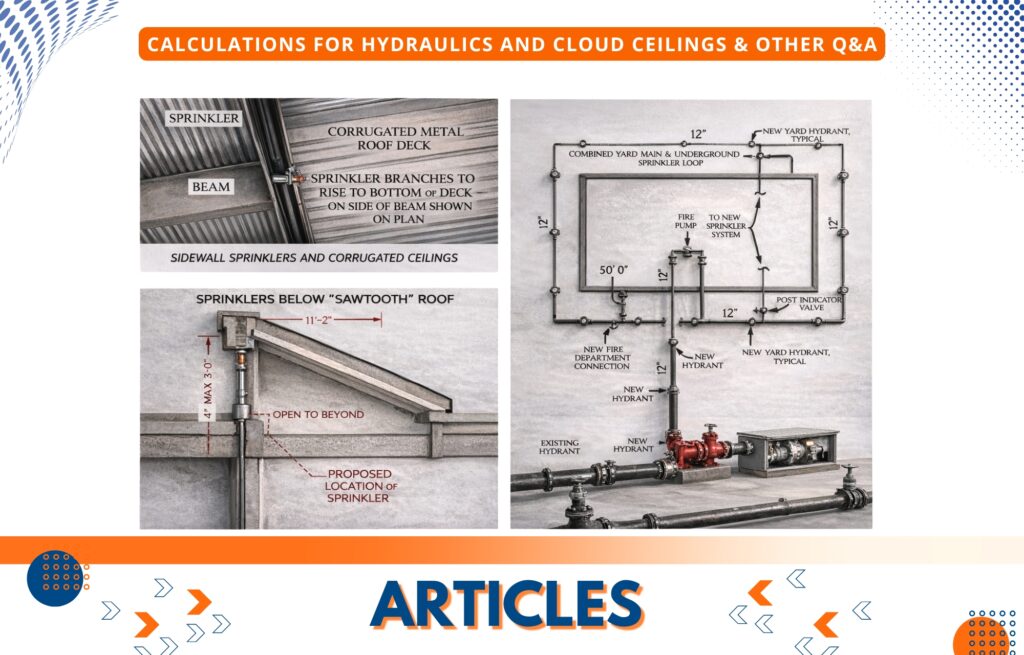
The following are a dozen of questions answered keeping in mind various Codes, Standards related fire sprinkler system. A project includes solid racks that require in-rack sprinklers with an ESFR system at the ceiling installed in accordance with the 2016 edition of NFPA 13. Are the in-rack sprinklers required to be quick response or […]
Fire Sprinkler Testing Methods & Replacement – Q&A
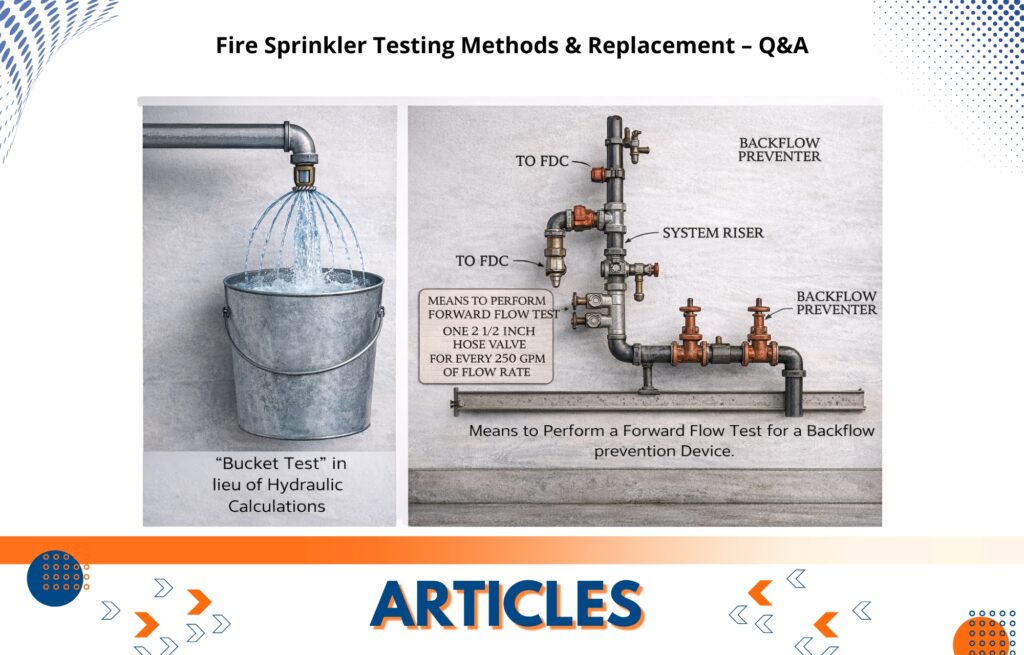
INTRODUCTION: NFPA 13 requires that when retrofitting a backflow preventer into an existing sprinkler system, a thorough hydraulic analysis must be performed. This analysis includes revised hydraulic calculations, new fire flow data, and any modifications to the existing system to accommodate the additional friction loss due to the new backflow preventer. NFPA 14 does not […]
USE OF ANTIFREEZE IN FIRE SPRINKLER SYSTEM
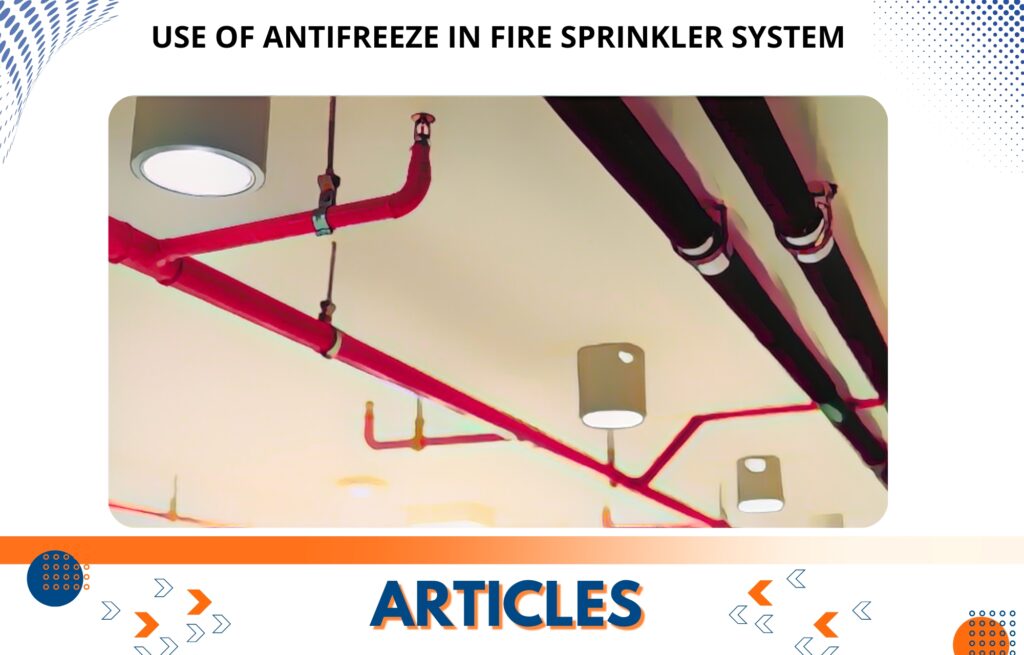
INTRODUCTION: In 2010, NFPA launched an investigation into the use of antifreeze in fire sprinkler systems, leading to restrictions on the percentages of glycerin and propylene glycol used. This investigation caused significant changes in the fire sprinkler industry, with new antifreeze systems no longer allowed to be installed unless a listed antifreeze was available. Additionally, […]
Fire Sprinkler System installation- Q&A – vertical openings, bathroom, sidewall sprinklers and sloped ceilings.
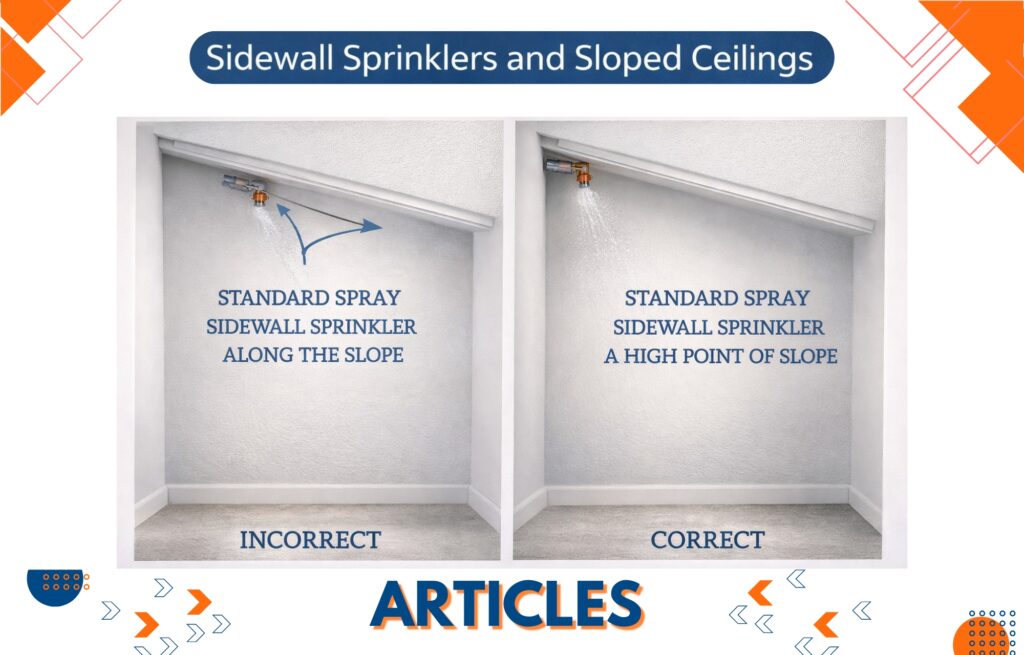
INTRODUCTION: NFPA 13 (2019 version) and NFPA 13R both permit the exclusion of sprinklers from restrooms that are 55 square feet or smaller. NFPA 13 states that sprinklers are not required in tiny bathrooms that serve dwelling units and are less than 55 square feet in size if the walls and ceilings are completed with […]
Environmental Issues – water flow from fire sprinkler systems
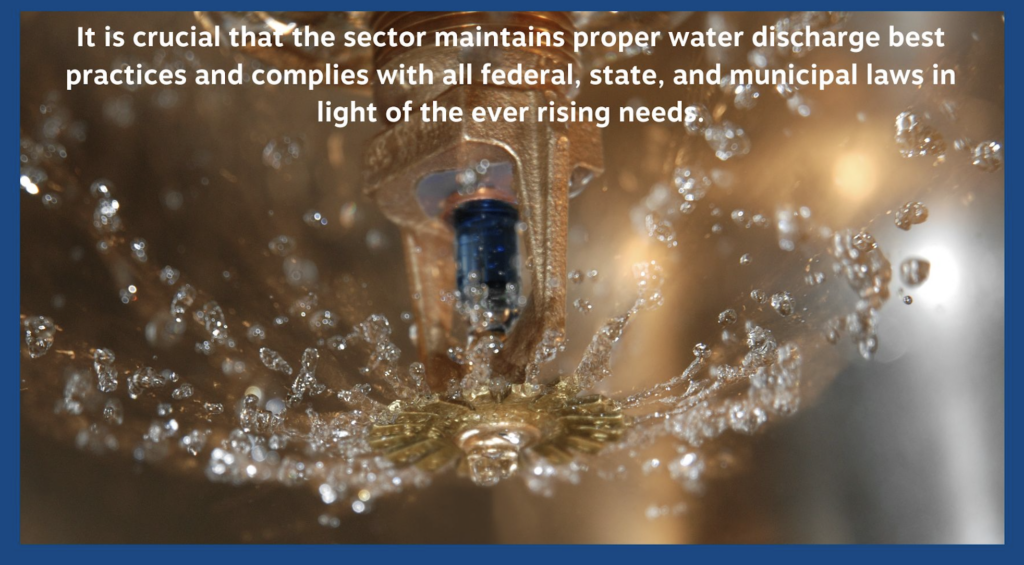
INTRODUCTION: The industry has been concerned with water discharge for decades, but environmental consciousness continues to develop and presents new issues. Polyfluoroalkyl compounds (PFAs) are one of the most prevalent contaminants present in today’s water, and they are linked to illnesses of the immune system, reproduction, and cancer. AFFF has been used by the military, […]
Fire Sprinkler installation – Q&A
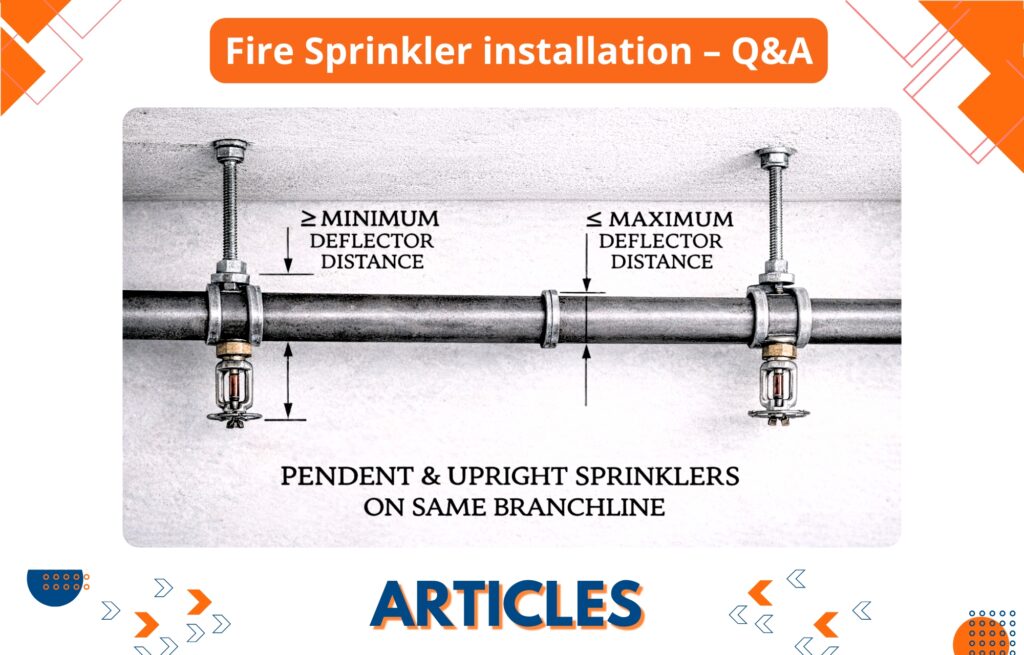
INTRODUCTION: NFPA 13R requires that sprinklers on a branch line be compliant with manufacturer’s listing standards, and residential sprinklers can be deployed in conventional danger zones under certain conditions. The space is constructed to withstand a 30-minute fire and is compartmented into 500 square feet or fewer, with sprinklers separated by 130 square feet each. […]
Hazard and Commodity Classification
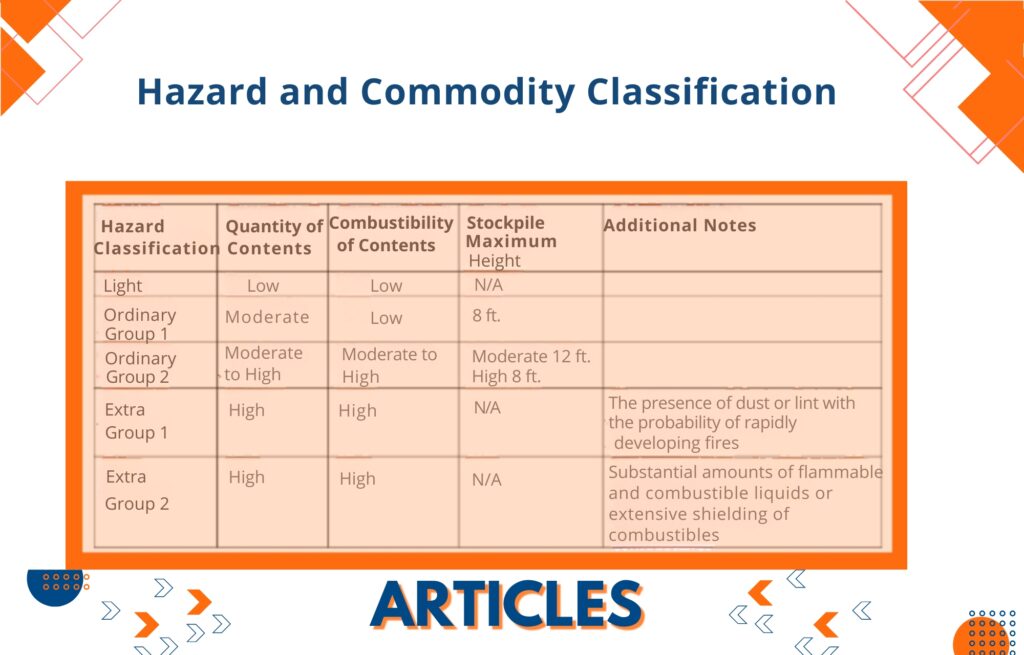
INTRODUCTION: The Discharge Criteria Committee is responsible for classifying fire risks, establishing discharge standards, planning and calculating sprinkler systems, and managing water supply. Data from the EOD programme shows that the majority of requests for interpretation are related to hazard classification and commodity classification. It is the responsibility of an engineer to determine both hazard […]
Fire Sprinkler Design for Lithium-Ion Battery Bulk Storage
INTRODUCTION: The NFPA Research Foundation and FM Global commissioned studies to create protection standards for rack storage of cartoned Li-ion battery packs. Phase III found that Cartoned Unexpanded Plastics (CUP) were a suitable substitute for Li-ion batteries, providing the protection system design suppresses the fire within 5 minutes. FM Data Sheet 8-1 specifies a maximum […]