Home / Fire Sprinkler & Standpipe Systems
Rotaflow offers fire sprinkler and standpipe system design, installation, inspection and maintenance services for commercial, industrial and high hazard sites to provide reliable fire protection and code compliant system operation.
We conduct annual audits and regular reviews of our certifications to ensure all systems are up-to-date and compliant with the latest industry standards.

Rotaflow offers fire sprinkler, standpipe, inspection, and fire prevention system solutions for commercial and industrial sites.
Rotaflow designs, installs, inspects and maintains NFPA compliant fire sprinkler systems for commercial, industrial and residential applications. Systems are engineered for quick fire suppression, reliable water delivery, and long-term code-compliant fire prevention performance.
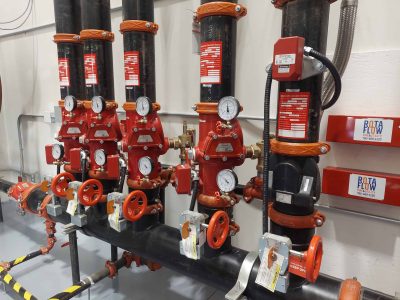
Standpipe systems assure firefighters of a supply of water in high-rise buildings and industrial properties. Rotaflow provides standpipe system design, installation, testing and maintenance services to enhance emergency response capabilities and provide code-compliant fire prevention infrastructure.

Rotaflow offers wet and dry standpipe systems depending on building occupancy, ambient conditions and accessible water supply infrastructure. Systems are designed to provide reliable fire department access, efficient emergency response, and compliance with applicable fire protection requirements.

Rotaflow also provides fire pump system design, installation, testing and maintenance services to provide reliable water pressure and fire protection performance for commercial and industrial establishments.
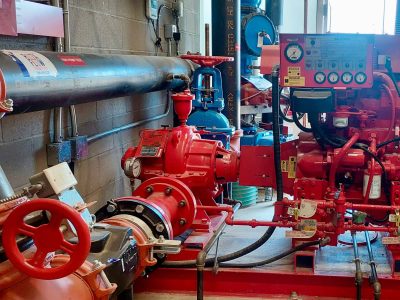
Inspection, testing and maintenance services help validate sprinkler and standpipe system performance, assist with NFPA compliance, and increase long-term reliability.

Backflow prevention systems assist protect potable water sources by preventing pollution, and help maintain safe, code compliant fire protection infrastructure.

Rotaflow provides fire protection design, installation, inspection and maintenance services to suit facility requirements.
Fire sprinkler and standpipe systems are designed to ensure NFPA compliance and reliable protection.
Certified installation services are conducive to correct system integration, operation and project coordination.
Inspection and testing services include flow testing, sprinkler inspections, and standpipe verification.
Maintenance services include sprinkler repairs, standpipe flushing and compliance support tasks.
Count on our emergency response services 24/7 to have things resolved fast and stay prepared for fire protection.
Rotaflow offers responsive fire protection support, inspections, maintenance and emergency services for industrial sites.
Rotaflow combines technical expertise, advanced coordination, and responsive support for reliable fire protection services.
Clear communication and project updates support smooth coordination and delivery.
BIM, Revit, and Navisworks support accurate layouts and system coordination.
Experienced specialists support detailed planning, coordination, and installation.
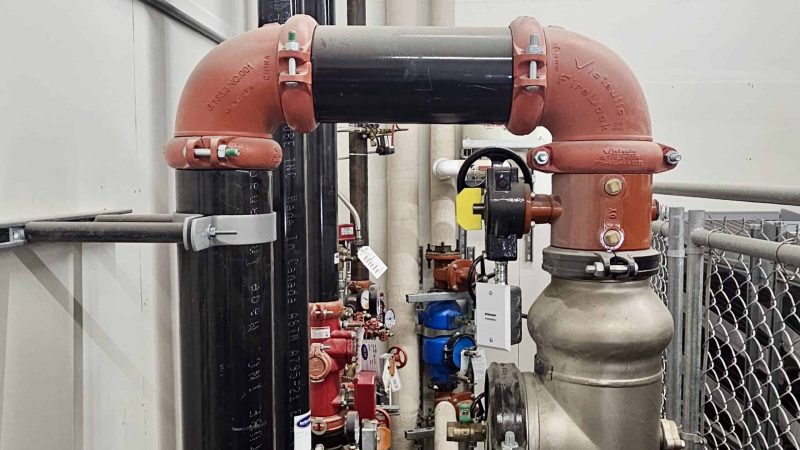
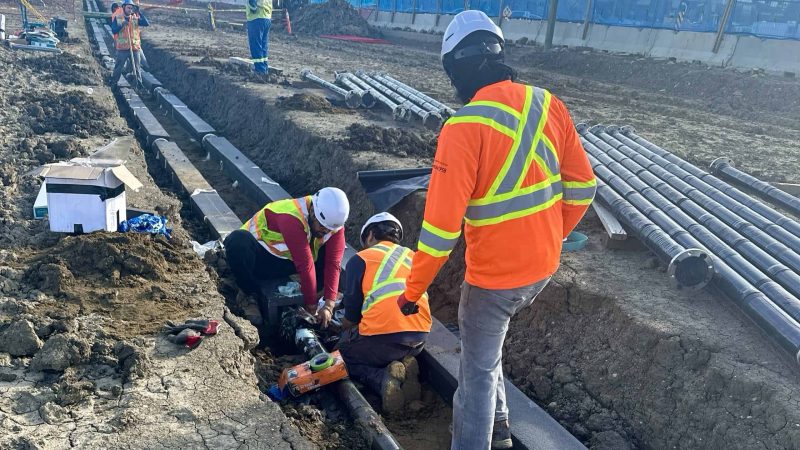
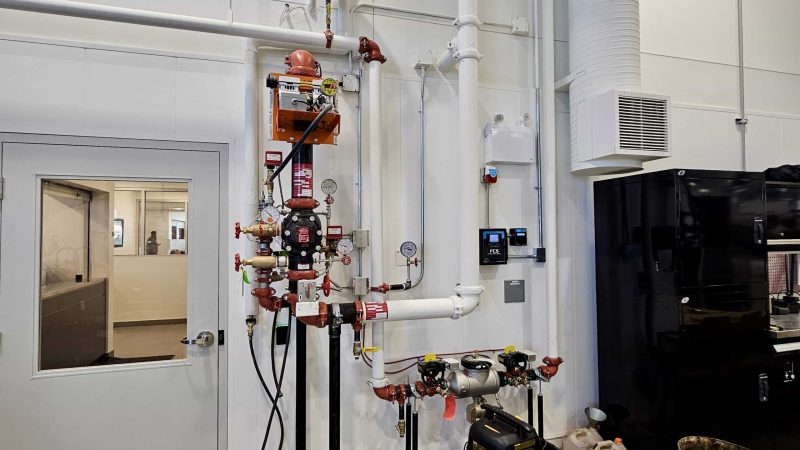
A fire sprinkler system is an automatic fire suppression system that detects heat and releases water to extinguish fires. In contrast, a standpipe system is a network of pipes that delivers water to multiple floors of a building, allowing firefighters to connect hoses and quickly access water during emergencies.
According to NFPA standards, fire sprinkler and standpipe systems should be inspected annually. However, some components, such as valves and pressure gauges, require monthly or quarterly inspections.
No. In wet, dry, and pre-action sprinkler systems, only the sprinkler heads closest to the fire activate. However, in deluge sprinkler systems, all sprinkler heads open at once to quickly control fires in hazardous areas.
Yes, fire codes and building regulations often require fire sprinkler and standpipe systems in commercial, industrial, and high-rise buildings. The requirements vary based on local fire codes, NFPA standards, and insurance policies.
Regular inspection, testing, and maintenance ensure your system functions properly. At Rotaflow Fire & Utility, we provide:
Pipe-schedule systems size piping according to prescriptive tables based on occupancy hazard. Hydraulically calculated systems size piping according to actual water demand, available water supply, elevation changes, and friction loss throughout the network. Hydraulic calculation has become the standard design method for most commercial and industrial fire sprinkler systems under NFPA 13, largely replacing pipe-schedule design, because it allows the system to be engineered to the actual hazard and water supply of the building rather than a generic table.
For Class I standpipe systems, NFPA 14 requires a minimum residual pressure of 100 psi (6.9 bar) at the hydraulically most remote 2½-inch standpipe outlet during the required design flow. Designers must also ensure that pressures are kept within acceptable limits to allow for effective firefighter operations but not exceed safe hose operating pressures when operating at high-rise and industrial facilities.
NFPA 13 occupancy hazard classifications are determined by factors including fuel load, combustibility of contents, potential for fire growth, type of manufacturing process, and storage of materials. It is classified as Light Hazard, Ordinary Hazard (Group 1 or 2), or Extra Hazard (Group 1 or 2). The classification will determine the design density, remote area, sprinkler spacing and maximum coverage per sprinkler. Hence, two buildings with similar floor areas may have very different designs of sprinkler systems.
The DCVA uses two independently operating check valves to prevent backflow. The DCVA is generally used where the fire protection system is not a major health hazard. A monitored relief valve located between two check valves offers a higher degree of backflow protection in an RPZ assembly and may be required in applications where foam concentrates, antifreeze solutions or other contaminants could enter the potable water supply. The appropriate assembly is determined by the local authority having jurisdiction (AHJ), applicable plumbing codes, and the design of the particular fire protection system.
NFPA 25 requires an internal obstruction investigation of sprinkler and standpipe piping at least every five years to identify the presence of corrosion, microbiologically influenced corrosion (MIC), scale, sediment or foreign material which could restrict the flow of water. An investigation may be needed sooner if evidence of obstruction is found during system testing, after an unusual discharge event, after changes to the water supply, or whenever conditions indicate internal pipe deterioration.
A fire sprinkler system is an important component of any fire protection strategy. These systems automatically detect heat and discharge water to suppress fires, preventing them from spreading. Automatic fire sprinkler systems significantly reduce fire damage and improve occupant safety.
A fire sprinkler system is an important component of any fire protection strategy. These systems automatically detect heat and discharge water to suppress fires, preventing them from spreading. Automatic fire sprinkler systems significantly reduce fire damage and improve occupant safety.


Dry Pipe Sprinkler Systems:
A dry pipe sprinkler system is designed for environments where freezing temperatures could cause pipes to burst. Instead of water, the pipes are filled with pressurized air or nitrogen, which is released before the water flows through the pipes. This system is commonly used in unheated warehouses, parking garages, and industrial facilities.

Pre-Action Sprinkler Systems:
Pre-action systems require two activation steps, making them ideal for environments with sensitive equipment such as data centres, museums, and libraries. This type of fire suppression system prevents accidental water discharge.

Deluge Sprinkler Systems:
A deluge sprinkler system is used in high-hazard areas like chemical plants and power stations, where fires can spread rapidly. Unlike standard automatic fire sprinkler systems, all sprinkler heads in a deluge system activate simultaneously to flood the area with water.

A standpipe system is a network of pipes that delivers water to multiple levels of a building, ensuring that firefighters have immediate access to water during an emergency. It serves as a fire department connection, allowing quick response times in high-rise buildings, warehouses, and large commercial properties.
Class I Standpipe Systems:
Equipped with 2.5-inch hose connections
Designed for use by trained firefighters
Common in shopping malls, stadiums, and high-rise office buildings
Class II Standpipe Systems:
Features 1.5-inch hoses for use by trained building occupants
Found in hotels, hospitals, and educational institutions
Class III Standpipe Systems:
A combination of Class I and Class II
Allows both firefighters and trained occupants to use the system
Installed in large industrial facilities and multi-story commercial buildings
Automatic Wet Standpipe System:
Water is constantly available in the pipes, allowing immediate use during a fire.
Automatic Dry Standpipe System:
Pipes are filled with pressurized air, with water released upon activation
Manual Wet Standpipe System:
Water is present in the pipes, but it relies on the fire department connection to maintain pressure.
Manual Dry Standpipe System:
Pipes remain empty until the fire department pumps water into the system.

From scoping and detailed design to construction and maintenance, if you’ve got questions or ideas you would like to share, send a message.
