Home / Fire Code Compliance
Rotaflow offers fire code compliance and smoke control solutions for industrial and commercial locations. Services include engineering support, risk mitigation techniques, process safety systems and electrical and instrumentation controls to assist facilities in meeting NFPA, ULC, FM Global and regulatory standards.
Our in-house engineering team navigates complex fire safety regulations, ensuring all fire protection systems comply with all standards.

Rotaflow promotes facilities with fire code compliance by providing evaluation, planning, training and compliance support services.
Rotaflow assesses existing fire protection systems, smoke control measures and facility safety processes to detect compliance gaps and operational hazards. Audit services include inspections, documentation reviews, performance assessments, and suggestions that enhance safer operations and increased regulatory compliance for industrial and commercial establishments.

Compliance assessments help facilities that meet NFPA, ULC, FM Global and local fire code criteria. Rotaflow examines system design and operational procedures, documentation and fire protection measures to identify weaknesses, minimise risk exposure and ensure continued compliance with evolving industry requirements and standards.
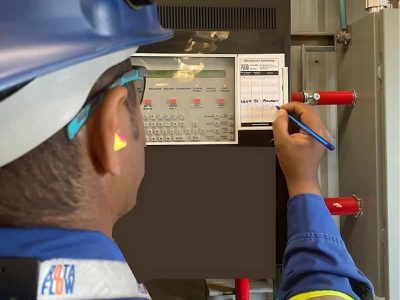
Rotaflow offers customised fire safety and emergency response plans based on the facility’s operation, occupancy requirements and hazard circumstances. Planning services aid industrial and commercial properties with their preparedness, response protocols and meeting fire code and safety compliance needs.

Emergency response planning and training services prepare teams for fire disasters, evacuation procedures and system emergencies. Rotaflow offers operational assistance, safety training and readiness programs that help improve reaction times and reduce operational risk during emergencies and helps facilities coordinate fire responses.

Rotaflow supports inspections, document reviews and compliance approvals with facility teams, consultants and regulatory bodies. Liaison services assist organisations in managing fire code requirements effectively while allowing for communication, collaboration, and resolution of reported compliance concerns.
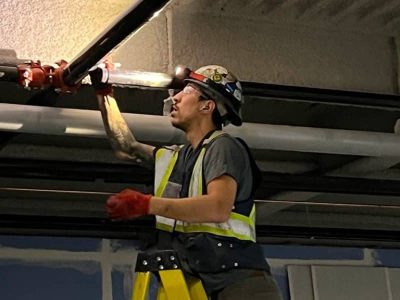
Fire protection system improvements assist facilities stay compliant with new fire codes, operational modifications and increasing safety needs. Rotaflow supports equipment replacements, system modifications, control upgrades and performance improvements that improve reliability, efficiency and regulatory compliance.
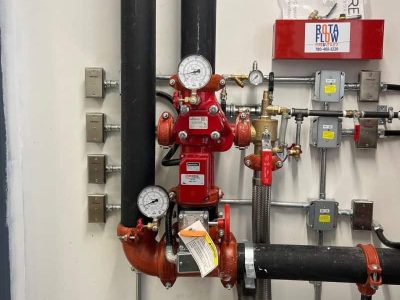
Rotaflow offers facilities support through inspections, compliance assessments, maintenance and fire code verification services.
Routine inspections and verification services help to maintain fire protection compliance and system performance.
An examination of fire control systems and safety measures is carried out to detect holes in compliance.
Compliance assessments assist in maintaining compliance with the Alberta fire code and national construction requirements.
Assessments of facility risk assist discover dangers, operations concerns, and fire safety improvements.
Maintenance and support services ensure smoke control systems are reliable and compliant.
Compliance documentation and reporting help inspections, approvals and regulatory coordination.
Rotaflow has the engineering experience, certified experts and state-of-the-art systems to provide reliable fire code compliance services.
Seamless integration of smoke control systems with existing building infrastructure.
Precision design and testing of smoke management and fire protection systems.
Aligned with current fire codes, regulations, and required safety standards.
Aligned with current fire codes, regulations, and required safety standards.
Advanced smoke detection and suppression systems for safer facility operations.
Comprehensive compliance reports supporting legal, regulatory, and insurance needs.
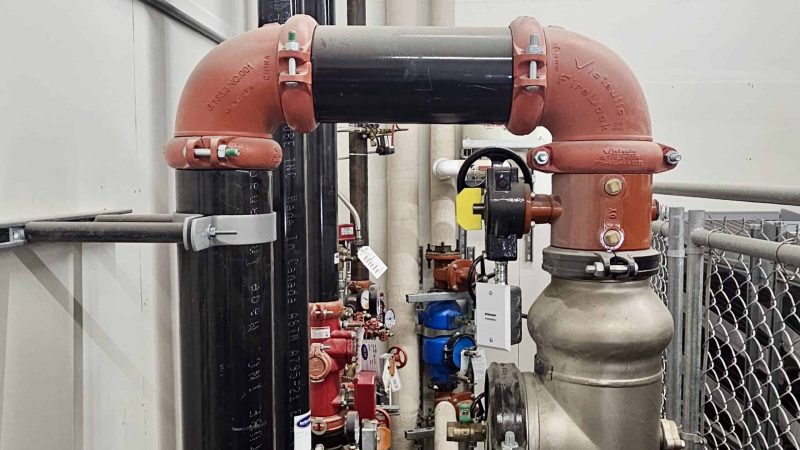
NFPA 25 requires that a record of all inspections, tests, and maintenance performed on a fire protection system be kept by the property owner. Documentation is part of the continuous compliance, not a one-time installation requirement. Records must be retained for a period of time and as-built system installation drawings and hydraulic calculations must be kept on file.
NFPA 25 defines an impairment as “A condition where a fire protection system (or portion thereof) is out of service and not functioning as designed.” The code distinguishes between an emergency impairment (unplanned) and a preplanned impairment (scheduled such as for maintenance work) and requires a formal tag impairment system and where applicable an impairment coordinator to manage notification, tracking and restoration of the system to service. Managing impairments properly is vital to code compliance. A system out of service without proper procedures is a compliance and life safety gap.
NFPA 25 defines the AHJ as an organization, office, or individual responsible for enforcing the requirements of a code or standard, or for approving equipment, an installation, or a procedure. The code says that the AHJ can be contacted on many compliance issues and can require more than the baseline standard where local conditions merit it — meaning full compliance is not just about satisfying the written code, but also satisfying the specific AHJ’s interpretation and requirements for a given property.
NFPA 13 sprinkler system design is based on occupancy hazard classification (Light, Ordinary or Extra Hazard) which is based on the fuel load, combustibility and storage configuration of the space, not just the building size or layout. This is why code compliance reviews look very closely at actual occupancy and use, as two buildings of the same footprint can have very different design and compliance requirements depending on what’s inside them.
NFPA 25 recognises that a standard may be superseded by a later edition or amended after publication — that is, code requirements are not static. As a rule, a building must be updated to a later edition if that edition is adopted by the AHJ and has retroactivity provisions. This is why periodic compliance reviews are important even for buildings that were in compliance with an earlier code cycle.
Rotaflow specializes in smoke control management, ensuring building systems are designed, tested, and maintained for regulatory compliance. Effective smoke management protects occupants, minimizes property damage, and supports fire code adherence
Rotaflow offers tailored fire protection solutions to reduce risks and protect assets across industries. Our proactive approach includes:
Our goal is to safeguard your assets with the most effective fire protection strategies
Rotaflow assesses potential fire hazards across facilities, creating customized strategies for unique risks. Tailored approaches are particularly effective for complex applications where standard codes may not fully apply.
Rotaflow specialises in risk mitigation for industries such as:

From scoping and detailed design to construction and maintenance, if you’ve got questions or ideas you would like to share, send a message.
