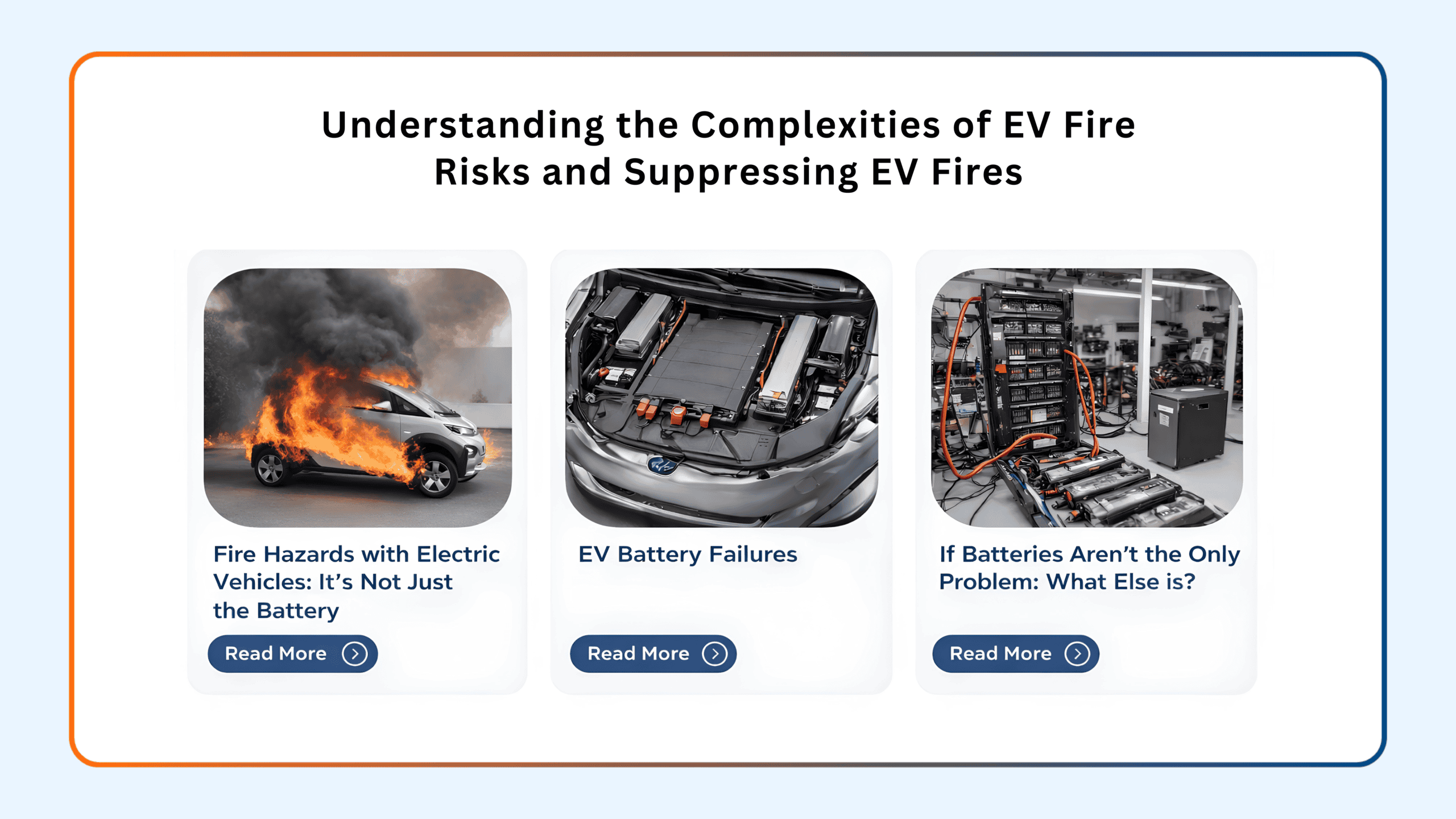
The growing number of electric vehicles (EVs) on our roads has increased awareness of the potential fire hazard that these vehicles’ lithium-ion (li-ion) batteries pose. But the dangers associated with EVs go beyond dead batteries; they also include a host of other issues that might lead to car fires. Let’s examine the intricacies of the fire risks related to electric vehicles in this extensive guide, including not only the function of lithium-ion batteries but also additional elements like the materials utilized in contemporary cars. We hope to offer important insights into comprehending and reducing the dangers related to EV fires through an analysis of current research findings and industry advancements. This is a comprehensive view of managing fire threats in the age of electric mobility, covering everything from the development of EV technology to the difficulties encountered in fighting fires.
Today’s EVs are not like those from the past. Li-ion batteries are commonly used due to their high energy density (KWH/pound), fast recharge times, and quick discharge, enabling rapid acceleration. Battery packs for today’s automobiles weigh approximately 1,000 pounds (2). These packs are made up of multiple separate battery cells (similar to D-cell batteries) connected together and placed in a protective casing. Properly designed cases protect batteries and prevent them from releasing their stored energy. When they fail, fires frequently occur.
When EVs catch fire, they frequently generate front-page or even national headlines. As a result, it’s easy to assume that such incidents are commonplace. In reality, they are uncommon. In 2020, the NTSB reported about 200,000 fires involving ICE vehicles. There were just 52 involving all-electric vehicles (4). Even though ICE vehicles outnumber EVs on the road, they are 20 times more likely to catch fire than EVs (5).
Moving forward, it is anticipated that the risks of EVs will be reduced even further. Rivian and Ford plan to use Lithium Iron Phosphate (LFP) technology for their EVs starting in 2024, replacing li-ion batteries. In 2024, Tesla will employ this technology, with the exception of high-performance vehicles. LFP provides various advantages over lithium-ion batteries. One benefit is a lower chance of thermal runaway (6). LFP batteries have a lower energy density and release rate compared to Li-ion batteries, which could explain this. LFP batteries have a non-flammable electrolyte; thus, if a cell breaks, no flammable fumes are emitted.
Plastics are considerably more likely to be the culprit. The materials used in current furniture, which can reach flashover in 3-4 minutes, are also contributing to the increased intensity of car fires. Originally, cars and trucks included steel body panels, fiber insulation, and natural fiber seats. Modern vehicles employ polypropylene body panels with polyurethane insulation and padding. Even the gasoline tanks are made of plastic.
A typical car contains almost 400 pounds of group A plastic, which accounts for 10% of its weight but 50% of its volume (8). This does not include the additional weight of synthetic fabrics (100 pounds) and synthetic rubber (200 pounds). To estimate the amount of fuel these synthetics contribute to a fire, consider that a 20-gallon gasoline tank contains around 120 pounds of hydrocarbons (140 pounds for diesel). The modern car uses four times more gasoline than the liquid fuel it operates on, rather than preventing fires from spreading.
Testing will be required to determine whether this is a suitable classification.
The 2023 edition of the 88A Standard for Parking Structures mandates sprinklers in all parking structures to comply with NFPA 13 and 13R (6.4.1). NFPA 88A may not have a significant impact on I-Code enforcement because the IFC does not recognize it.
Furthermore, the use of lithium iron phosphate (LFP) batteries and other developments in EV battery technology promise to substantially reduce the likelihood of thermal runaway and battery-related fires in the future.
It is imperative to establish complete fire protection measures, such as adequate sprinkler systems and revised building rules for parking structures, in order to properly handle fire threats in the era of electric mobility. Fire protection specialists can proactively handle the evolving issues provided by electric vehicles and ensure the safety of both vehicle occupants and property by keeping up to date with the latest research findings and industry advancements. An all-encompassing strategy for fire safety will be essential as electric vehicles become more commonplace on our roads to protect infrastructure and communities from the possible dangers of EV fires.
Courtesy: Rob Geislinger, Field Service Coordinator, Area 9 for the NFSA.